
Predictive Analytics for Customer Experience: How Businesses Use Data to Understand Customers
Create Account
Have an account? Login
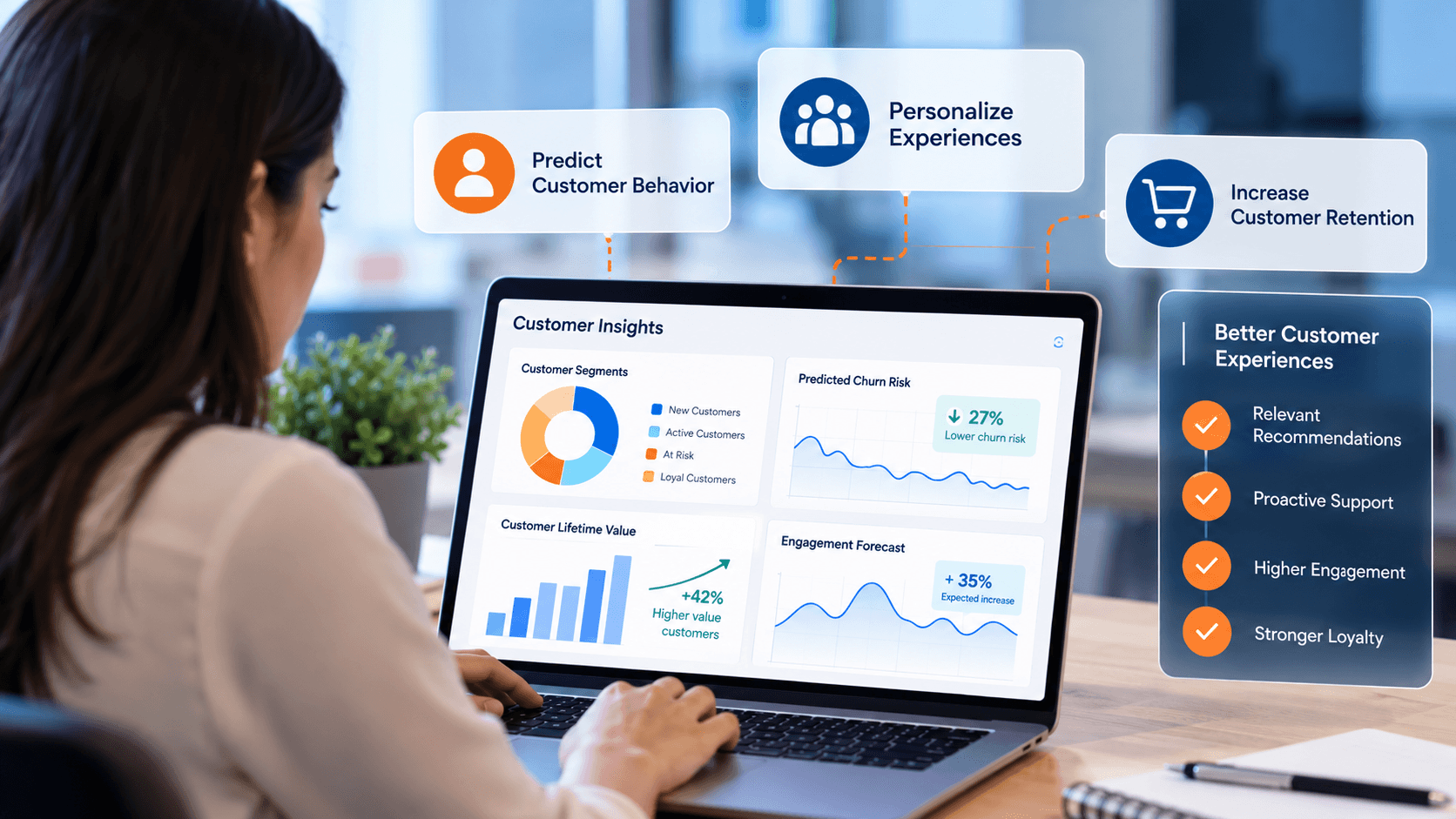
Understanding what customers need is essential for building lasting business relationships. However, customer preferences, expectations, and purchasing behavior can change quickly. Businesses that rely only on past sales or customer feedback may struggle to recognize these changes early.
Predictive analytics for customer experience helps businesses use historical data, customer interactions, and behavioral patterns to estimate what customers may need or do next. These insights can support more relevant recommendations, better customer service, and more informed business decisions.
In this guide, we'll explore how predictive analytics improves customer experience, practical business use cases, its benefits and limitations, and the steps organizations can take to use customer data more effectively.
What Is Predictive Analytics in Customer Experience?
Predictive analytics in customer experience is the process of using historical and current customer data, statistical methods, and machine learning models to estimate future customer behavior or needs.
Businesses may analyze information such as:
- Purchase history and product preferences
- Website visits and customer interactions
- Customer service requests and feedback
- Subscription activity and renewal patterns
- Customer engagement and transaction history
For example, a subscription business might analyze customer activity to identify accounts that show patterns associated with cancellations. A marketing team might use previous purchases and browsing behavior to recommend products that are more relevant to a customer's interests.
Predictive analytics does not tell a business exactly what every customer will do. It estimates possible outcomes based on available data, and those estimates should be evaluated before they are used to make decisions.
How Predictive Analytics Improves Customer Experience
1. Personalized Customer Experiences
Customers often expect businesses to provide relevant information, products, and services instead of generic messages. Predictive analytics can help organizations understand which offerings may be useful to different customers.
By analyzing purchase history, browsing patterns, and stated preferences, businesses can estimate which products, services, or content may interest a customer.
For example, an online learning platform could recommend courses related to a learner's previous activity and career interests. A retail business might suggest products that complement a customer's earlier purchases.
Personalization should remain helpful and transparent. Businesses should avoid making intrusive assumptions or using sensitive information in ways customers would not reasonably expect.
2. Anticipating Customer Needs
Predictive analytics can help businesses identify situations in which customers may need assistance, information, or a particular service.
For example, a software company might analyze product usage patterns to identify customers who are having difficulty completing an important setup step. The support team could then provide a relevant tutorial or offer assistance.
Anticipating customer needs can reduce unnecessary effort for customers when the predictions are accurate and the support offered is appropriate.
3. Identifying Potential Customer Churn
Customer churn occurs when customers stop purchasing from a business, cancel a subscription, or discontinue a service.
Predictive models can analyze historical customer behavior to identify patterns associated with possible churn. These patterns might include reduced engagement, repeated support problems, or changes in purchasing frequency.
A subscription business could use these insights to review accounts that may need additional support. For example, customers who repeatedly encounter technical issues might receive help from the customer service team.
Churn predictions should be treated as signals for investigation rather than proof that a customer intends to leave. Businesses should avoid automatically sending excessive messages or making decisions that negatively affect customers based only on a prediction.
4. Improving Customer Service
Predictive analytics can help customer service teams prepare for common problems and allocate resources more effectively.
By analyzing historical support requests, businesses may identify recurring issues, periods of increased demand, or customer journeys that frequently lead to confusion.
For example, an online service might discover that customers often request assistance after changing their account settings. The business could improve its instructions, update its help center, or provide clearer guidance within the product.
These insights can help organizations address problems before they create unnecessary frustration for customers.
5. Supporting Better Customer Journey Decisions
The customer journey includes the interactions a person has with a business, from discovering a product to purchasing it and receiving ongoing support.
Predictive analytics can help teams identify where customers may encounter difficulties or abandon a process.
For example, an ecommerce business might analyze previous checkout activity to identify patterns associated with abandoned carts. The team could investigate whether delivery costs, confusing forms, or payment problems are contributing to the issue.
Once the underlying problem is understood, the business can test changes to the customer journey and measure whether they improve the experience.
Predictive Analytics Customer Experience Use Cases
Predictive analytics can support different customer experience activities depending on the business model, the available data, and the decisions a team needs to make.
| Business area | How predictive analytics can help | Example |
|---|---|---|
| Marketing | Estimate customer interests and likely engagement | Recommend relevant products or learning resources |
| Customer support | Identify recurring problems and potential support needs | Offer guidance when customers repeatedly struggle with a feature |
| Subscription services | Identify patterns associated with possible churn | Review accounts with declining engagement |
| Ecommerce | Understand patterns in purchasing and checkout behavior | Investigate why customers abandon checkout |
| Customer success | Estimate which customers may need additional assistance | Provide onboarding support to customers who have not completed setup |
These are potential applications rather than guaranteed results. A prediction is useful only when the business can interpret it correctly and take an appropriate action.
Predictive Analytics vs. Traditional Customer Analytics
Traditional customer analytics and predictive analytics serve related but different purposes. Traditional analytics often explains what has already happened, while predictive analytics estimates what may happen in the future.
| Analytics approach | Main question | Customer experience example |
|---|---|---|
| Descriptive analytics | What happened? | How many customers canceled their subscriptions last month? |
| Diagnostic analytics | Why did it happen? | What problems were commonly reported before cancellation? |
| Predictive analytics | What might happen next? | Which customers show patterns associated with possible cancellation? |
| Prescriptive analytics | What action could be taken? | Which support or service improvements should the team evaluate? |
Businesses often combine these approaches. Historical analysis helps teams understand customer behavior, predictive models estimate future outcomes, and testing helps determine which actions actually improve customer experience.
Benefits of Predictive Analytics for Customer Experience
More Relevant Interactions
Customer data can help businesses provide recommendations and information that better match individual interests and needs.
Earlier Identification of Problems
Predictive models may identify patterns associated with customer frustration, declining engagement, or service difficulties, allowing teams to investigate problems sooner.
Better Resource Planning
Forecasts of customer support demand or service usage can help organizations plan staffing, support resources, and operational improvements.
More Informed Business Decisions
Predictive insights can give teams additional evidence when deciding which customer journeys, services, or processes need further investigation.
Potential for Stronger Customer Relationships
When predictions lead to relevant and respectful assistance, businesses may make interactions easier and more useful for customers. The impact should be evaluated using customer feedback and actual behavior rather than assumed.
How to Implement Predictive Analytics for Customer Experience
Organizations do not need to begin with a complex predictive analytics project. A focused approach can help teams understand whether customer data provides useful insights and whether those insights lead to better experiences.
Step 1: Define a Customer Experience Problem
Start with a specific question. For example, a business might want to understand why customers abandon registration, which customers need onboarding support, or what contributes to subscription cancellations.
A clear problem makes it easier to choose relevant data and evaluate whether the analysis is useful.
Step 2: Identify Relevant Customer Data
Determine which information is needed to investigate the problem. Depending on the use case, this might include transaction records, customer feedback, product usage, or support interactions.
Use data that is relevant, appropriately collected, and permitted for the intended purpose. Avoid gathering or using personal information simply because it is available.
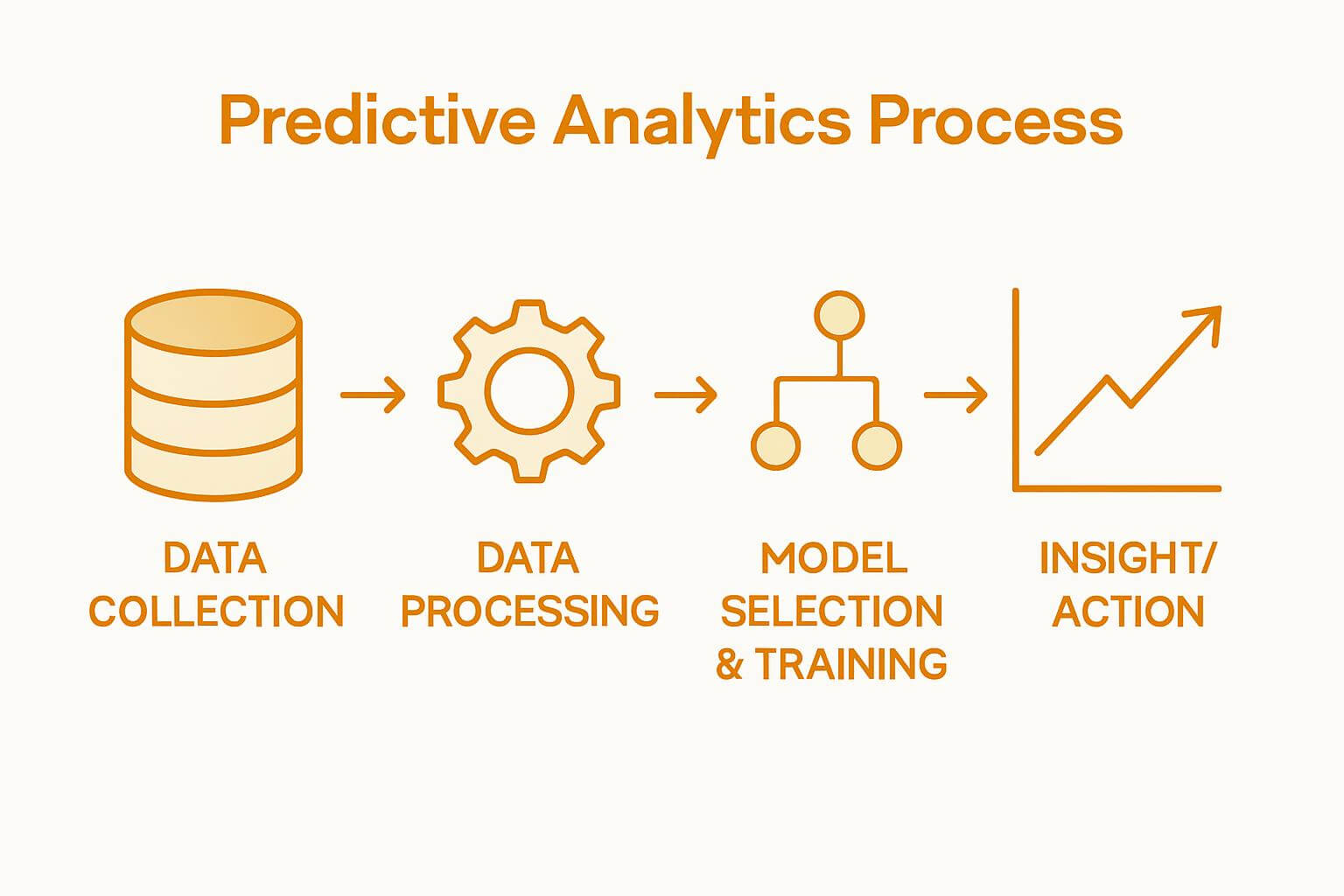
Step 3: Prepare and Analyze the Data
Customer data may contain missing information, duplicate records, inconsistent formats, or outdated details.
Teams should review data quality before building predictive models. Poor-quality data can lead to unreliable predictions and misleading conclusions.
Step 4: Build and Evaluate a Predictive Model
Depending on the problem, a business may use statistical methods or machine learning to estimate customer behavior.
Models should be evaluated using appropriate data and measures. Teams should consider whether predictions are accurate enough for the intended use, whether they perform consistently across customer groups, and what happens when a prediction is incorrect.
Step 5: Use Insights to Guide Appropriate Actions
Predictive insights should support decisions rather than automatically determine every customer interaction.
For example, a churn prediction might prompt a support team to investigate whether a customer is experiencing a problem. The team can then decide whether assistance is appropriate instead of automatically sending repeated promotional messages.
Step 6: Measure and Improve
After introducing a change, measure its effect on the customer experience. Possible measures include customer satisfaction, task completion, support resolution time, repeat purchases, and subscription retention.
Where practical, compare outcomes with a suitable baseline or test group. This helps determine whether the intervention actually improved the experience rather than simply coinciding with a change in customer behavior.
Challenges and Limitations of Predictive Analytics
Data Quality
Incomplete, outdated, or inconsistent data can reduce the reliability of predictive models. Businesses should regularly review data quality and understand the limits of their information.
Privacy and Customer Trust
Customer information may include sensitive or personal details. Organizations should follow applicable privacy requirements, explain relevant data practices, and use approved systems for processing customer information.
Bias in Predictions
Predictive models may produce unfair or inaccurate outcomes for particular customer groups, especially when historical data reflects unequal treatment or incomplete representation.
Teams should evaluate models for potential bias and consider how incorrect predictions could affect customers.
Predictions Are Not Certainties
A predictive model estimates possible outcomes based on patterns in data. Customer behavior can change, and a prediction may be wrong.
Businesses should use predictions as evidence to support investigation and decision-making, not as unquestionable facts about individual customers.
Integration With Business Processes
Predictive analytics may require coordination between marketing, customer support, data teams, and product teams. Insights have limited value if employees cannot access them or do not know how to use them responsibly.
Frequently Asked Questions
What is predictive analytics in customer experience?
Predictive analytics in customer experience uses historical and current customer data to estimate future behavior or needs. Businesses may use it to support personalization, customer service, churn analysis, and customer journey improvements.
How does predictive analytics improve customer experience?
It can help businesses identify potential problems earlier, provide more relevant recommendations, anticipate support needs, and make better-informed decisions about customer interactions. Results depend on data quality and appropriate implementation.
What is an example of predictive analytics in customer service?
A subscription business might analyze customer activity and support history to identify accounts that show patterns associated with service difficulties. The support team could review those accounts and offer relevant help where appropriate.
What is the difference between predictive and descriptive customer analytics?
Descriptive analytics summarizes what has already happened, such as the number of customers who canceled a subscription. Predictive analytics estimates what may happen next, such as which customers show patterns associated with possible cancellation.
Does predictive analytics require artificial intelligence?
Not always. Predictive analytics can use statistical methods as well as machine learning. The appropriate approach depends on the problem, the data, and the level of complexity required.
Can predictive analytics guarantee customer retention?
No. Predictive analytics can estimate patterns associated with churn, but it cannot guarantee that a customer will stay. Businesses should investigate the causes of customer dissatisfaction and evaluate whether their actions improve retention and customer experience.
Conclusion
Predictive analytics for customer experience helps businesses use customer data to understand possible future needs, identify potential problems, and make more informed decisions.
From personalized recommendations and customer support planning to churn analysis and customer journey improvements, predictive insights can support more relevant and timely interactions when they are used responsibly.
However, successful implementation requires more than building a predictive model. Businesses need reliable data, appropriate evaluation, respect for customer privacy, and a clear process for turning insights into helpful actions.
By combining predictive analytics with customer feedback, human judgment, and ongoing testing, organizations can work toward experiences that are more useful, responsive, and aligned with customer needs.
Learn More About Data-Driven Decision Making
Building effective predictive analytics workflows requires an understanding of data, analysis, and business strategy. Read WFI's guide to building a data science strategy to explore how organizations can approach data-driven initiatives.